
Step 1: Start using digital forms
To assess a patient’s condition, it is important to collect relevant information through structured questions. Digital forms provide an efficient and consistent way of gathering qualitative information.
Amni Care supports the administration of digital forms, enabling remote patient engagement, reducing administrative burden, and improving the efficiency of clinical documentation.

Step 2: Enhancing clinical insight through programmes
Clinical presentations are often multifactorial, with patients frequently presenting with co-occurring and interrelated conditions. As such, assessment should extend beyond symptomatology alone to include broader domains such as health-related quality of life and functional status in daily living.
Amni Care enables the integration of multiple validated measures within structured programmes, supporting the collection and synthesis of clinical data into a standardised and comprehensive overview of the patient’s presentation. This facilitates more informed clinical assessment and decision-making.
Step 3: Measurement and follow-up
Ongoing monitoring of patients over time is essential to understanding clinical progression and treatment response. Amni Care enables the remote collection of high-quality patient-reported data, supporting longitudinal assessment of both health status and patient experience. This includes both PROMs (Patient-Reported Outcome Measures) and PREMs (Patient-Reported Experience Measures).
By automating data collection and follow-up processes, Amni Care reduces administrative burden for healthcare professionals while ensuring a consistent and streamlined experience for patients.

Step 4: Expanding functionality with additional tools
Amni Care provides a comprehensive range of digital tools and validated measurement instruments to support diverse clinical requirements.
In addition to structured forms, the platform includes journals, care plans, consent documentation, treatment support modules, and a wide variety of other functionalities designed to support clinical workflows and patient care pathways.
Step 5: Enhancing communication with patients
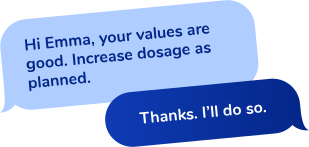
Maintaining effective communication between clinicians and patients, particularly between scheduled appointments, can play an important role in supporting treatment adherence and clinical outcomes. This may include reinforcement of treatment plans, brief supportive messages, or adjustments to medication where appropriate.
Amni Care enables clinicians to establish a structured and time-bound communication channel with patients. A secure messaging functionality facilitates clear and efficient communication between both parties within a controlled and user-friendly digital environment.

Step 6: Medication follow-up
Amni Care supports remote medication follow-up, enabling patients to report relevant clinical information such as vital signs, treatment response, and any side effects from home, school, or healthcare settings.
Clinicians can manage ongoing prescriptions and communicate next steps directly to patients via secure messaging.
This approach helps reduce the need for in-person visits and unnecessary travel, while maintaining continuity of care. Medication programmes can also be integrated with other clinical assessments to provide a comprehensive, longitudinal overview of the patient’s health status.